Midwest State Government
— AI-Powered Business Platform
Starting a business is supposed to be about the idea. The vision. The risk worth taking. Instead, for business owners in this state, it meant weeks of fragmented research across a dozen agency websites, phone calls to offices that may or may not have the answer, forms filled out wrong, fines for licenses nobody told them they needed, and a creeping suspicion that the system wasn't built for them. It wasn't. It had never been designed at all.
This project set out to change that — a greenfield, AI-powered platform that would consolidate every requirement, permit, regulation, and license across state agencies into a single, personalized experience for business owners. A one-stop portal built on a simple promise: we did the work so you don't have to.
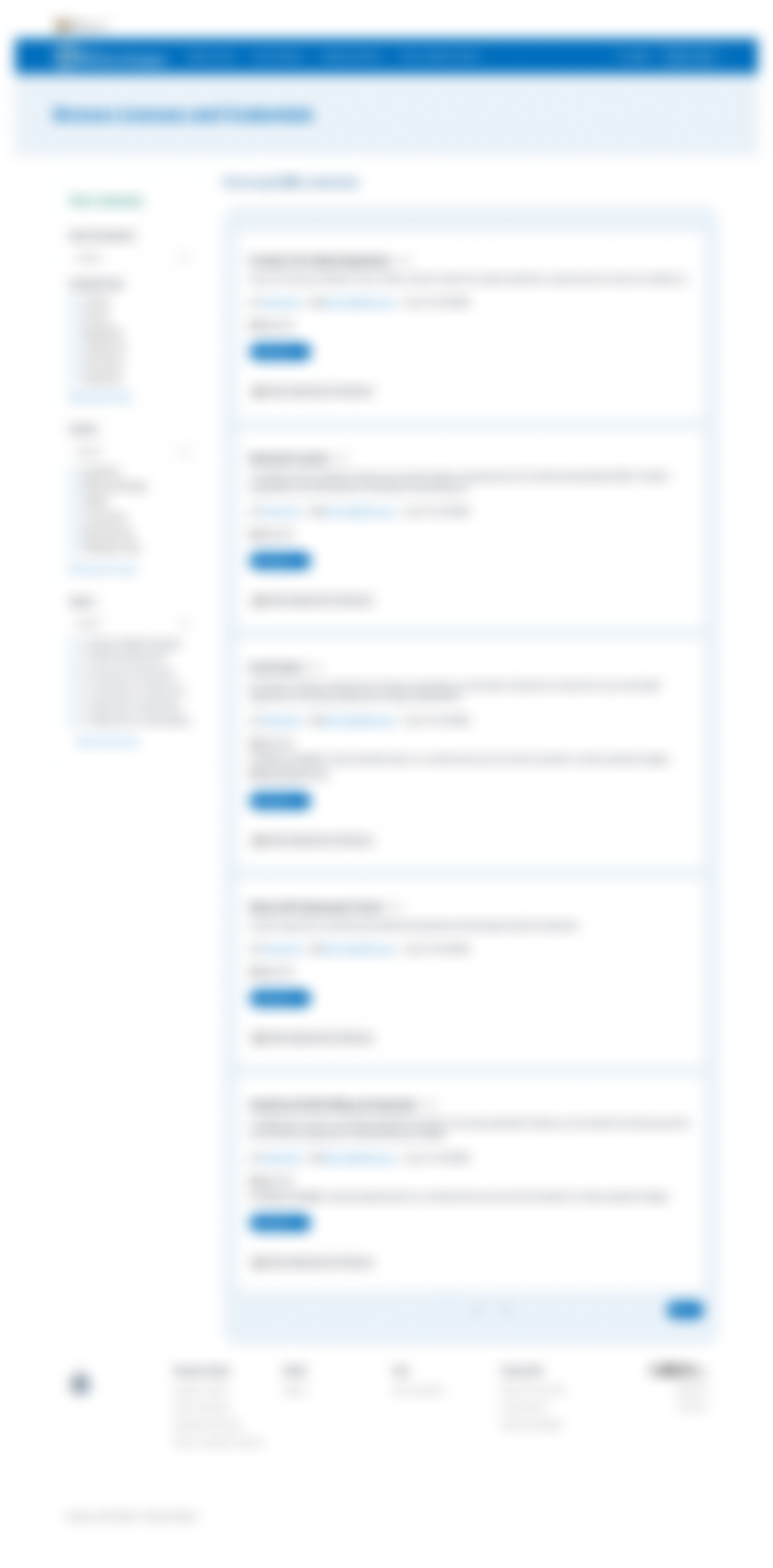
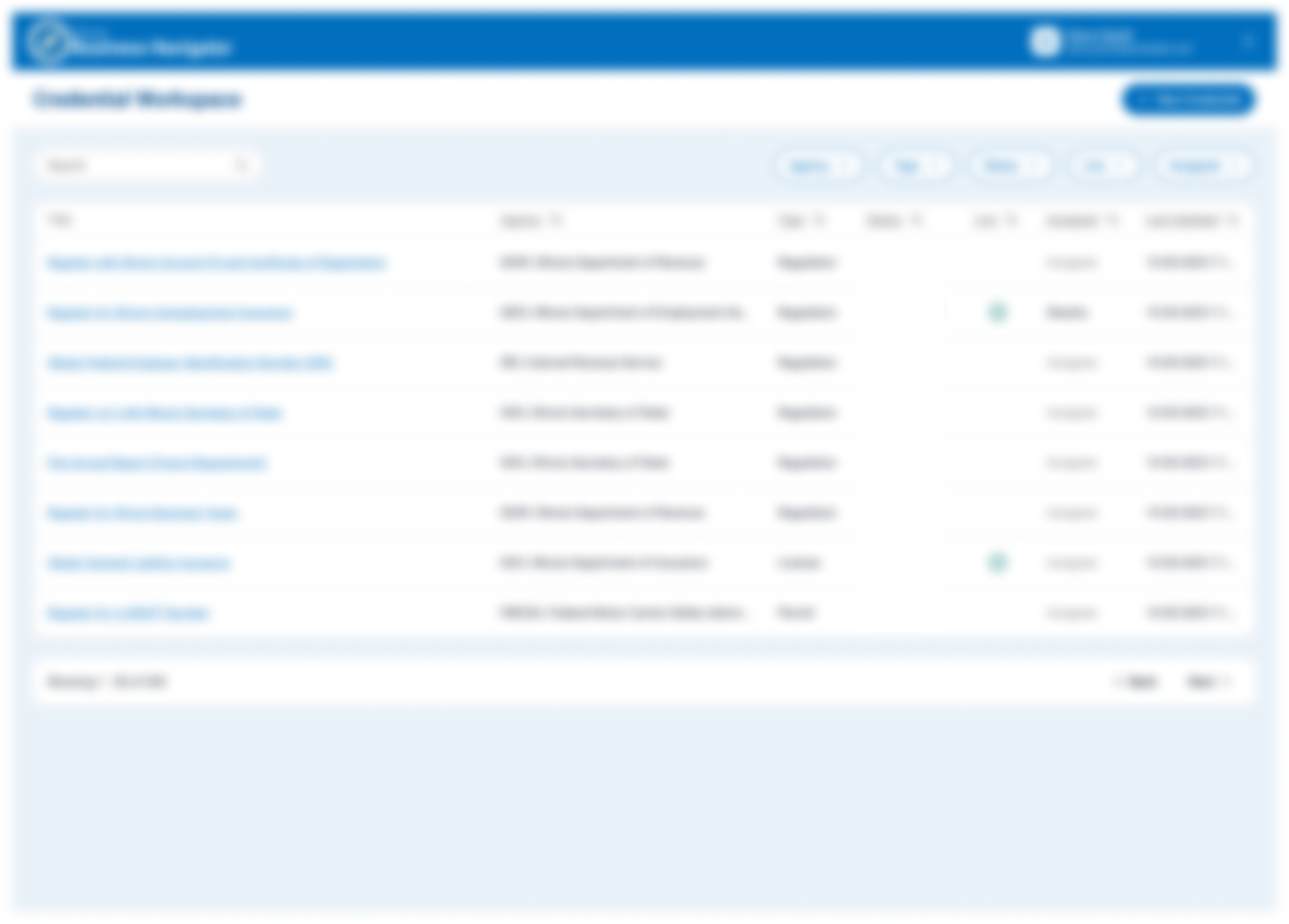
Building it required designing three interconnected things simultaneously. A content-driven public website. A wizard experience that asked business owners the right questions to generate a personalized compliance checklist. And an entirely new internal governance platform for state agency administrators — a role and a workflow that had never existed before.
That last piece is where the hardest design problems lived.
The problem nobody had solved yet
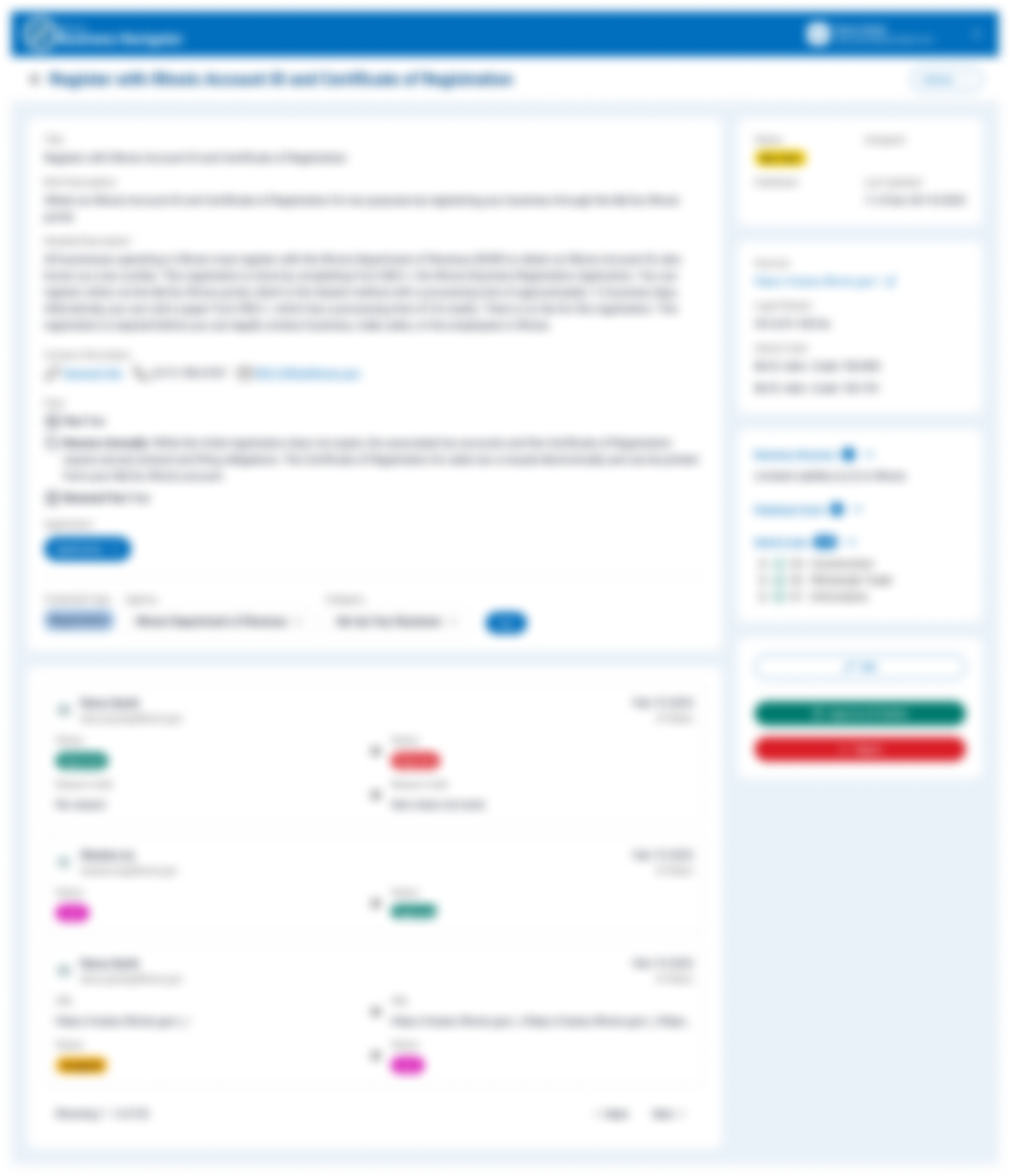
The AI at the center of this platform pulls from the same agency websites that business owners have always had to navigate themselves. It consolidates that content and presents it for human review and approval before it ever reaches a business owner. The administrators — representatives from each state agency — are the human in the loop. The trust layer between AI-generated content and a business owner making a real decision about their livelihood.
But these administrators had never done this before. There was no existing workflow, no existing role, no existing mental model to design toward. We were building it with them, through research, co-design sessions, and continuous feedback loops. Every decision had to balance two competing needs: rigor enough to ensure accuracy, and simplicity enough that administrators could get in, get going, and get out. A quagmire of an admin experience would undermine the entire trust architecture of the platform.
The hardest design problem wasn't the wizard. It wasn't the checklist. It was figuring out how to use AI not just in the product, but in the design process itself — how to get past the blank screen when you're designing something that has never existed. After more hours than I'll admit, I found a process that works: deep conversational prompting with AI tools to pressure-test scope and surface considerations, generating robust wireframe variants through AI-powered tools like UX Pilot, then bringing those into Figma for what I call the humanification — the craft layer that turns a generated skeleton into something that actually respects the person using it. It's a process I'm still refining. I don't think I'll ever stop.
Leading across the full spectrum
On this project I owned the design of everything — the public website, the wizard, the checklist, the administrator platform — while managing another designer and a graphic designer brought on for branding. I was also the primary design voice in a fixed-bid engagement, which means communication with the Product Manager wasn't just important, it was the mechanism by which the entire project stayed healthy. Fixed-bid projects punish ambiguity. I became deliberate, almost surgical, about how I presented design decisions — always anchored to intent, always connected to the problem we agreed we were solving, always leaving the PM with clarity rather than questions.
At the same time I was operating at delivery altitude, I was holding the long-term strategic view — how does this platform scale as more agencies come on board? How does the administrator experience evolve as the AI gets better? How do we design a content architecture flexible enough to handle the full complexity of state government without collapsing under its own weight?
That's the work. All of it, at once, every day.
What this project taught me
There's a version of government digital experience that earns trust by being competent. Clear, accurate, fast. That's the floor. What we're building reaches for something higher — a platform that treats a business owner's time, confusion, and anxiety as design inputs as important as any technical requirement. When someone gets their personalized checklist and feels confident rather than overwhelmed — that's not a feature. That's the mission.
I don't show up in big bang moments. I show up consistently. I show up relentlessly. I show up because I care deeply. My team knows that on the days I'm buried in meetings, on the days everything is piling up, on the days I probably should have taken off — I have their backs completely. Every question gets my full attention. Every designer on my team knows I'm in their corner.
That consistency is the only way to hold work this complex without dropping something. Each day, each moment, each choice builds toward the thing you're trying to make. You just have to keep showing up.